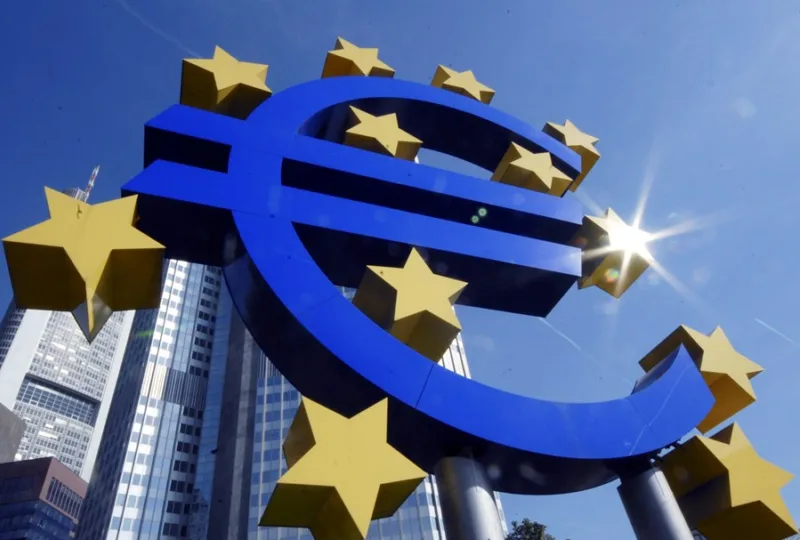
FILE - In this Sept. 21, 2007 file picture the Euro sign is photographed in front of the European Central Bank in Frankfurt, Germany. Less than three months ago, as its leaders scrambled to assemble a nearly US dlrs1 trillion rescue package for the eurozone, fears were rife that the continent was headed for a debt debacle and a painful economic crash. But upbeat economic signs - including robust German business confidence, predictions of strong second-quarter growth and successful bond auctions by Greece, Portugal and Spain - have helped change the picture. The latest piece in the puzzle: last Friday's release of "stress tests" designed to show how Europe's banks would cope with a deepening economic and debt crisis, which only seven of the 91 institutes surveyed failed. (AP Photo/Bernd Kammerer,File)
Godišnja stopa inflacije u eurozoni i Evropskoj uniji pala je za 2,6, odnosno 2,8 posto u februaru, pokazuju zvanični podaci Eurostata objavljeni u ponedjeljak.
Eurostat je podsjetio da je stopa inflacije u januaru bila 2,8, odnosno 3,1 posto, dok je u februaru 2023. iznosila 8,5 posto u eurozoni i 9,9 posto u EU.
Najniže godišnje stope zabilježile su Latvija, Danska (po 0,6 posto) i Italija (0,8 posto), dok su najviše godišnje stope zabilježene u Rumuniji (7,1 posto), Hrvatskoj (4,8 posto) i Estoniji (4,4 posto).
U odnosu na januar, godišnja inflacija je pala u 20 zemalja članica, u pet je ostala stabilna, a u dvije porasla.
Najveći doprinos godišnjoj stopi inflacije u eurozoni došao je od usluga, alkohola, duhana i energije, navodi Eurostat.